Context and Background Details
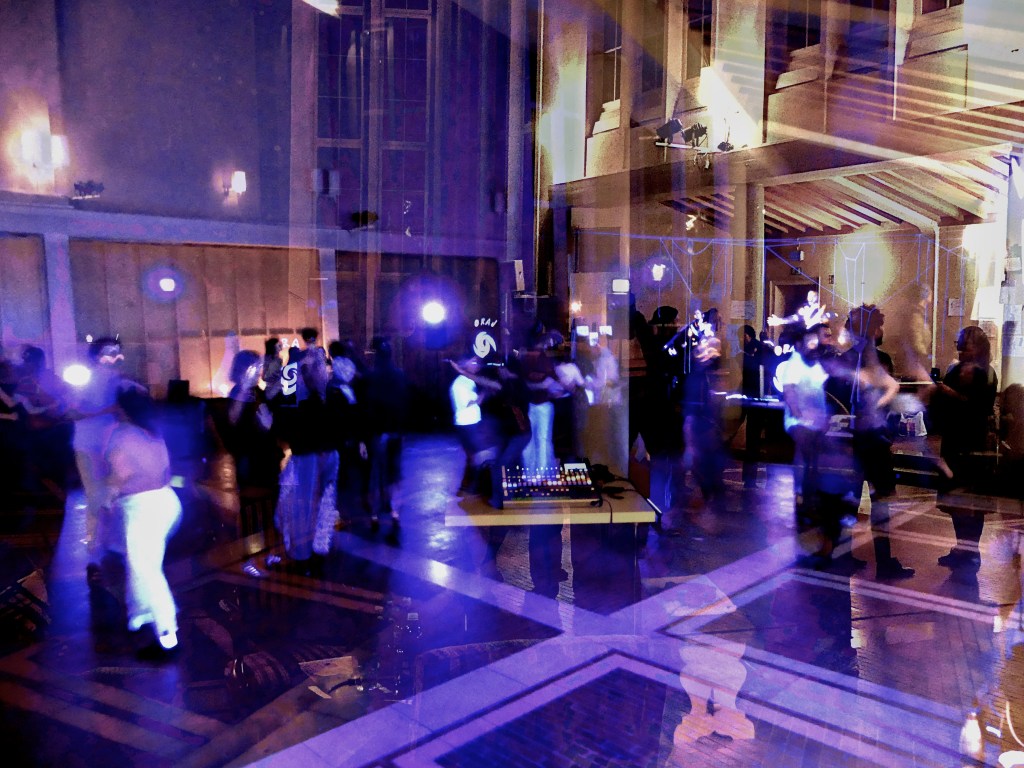
The InsTanz event creates points of contact between different worlds. Church spaces meet cultural spaces. Folk harmonies encounter fusion beats. Everyday realities transform into festive abandon. Social issues prompt individual responses.
We invite you
to dance and exchange ideas,
to get in touch and move,
to listen and encounter.
Let yourself be thrown off balance to become whole. Let it get dark, so that you can see better. Let yourself be swept away by something new.
The event is part of the “Dancing for Future” project. This means that both the planning and implementation of the event are designed to be as socially and ecologically fair as possible.
As the organizing team, we are committed to providing a safe and non-discriminatory space.
Date: December, 19th 2025
Event location: Markuskirche Bern
Organizing team:
Tian, Deby, Melly, Tobias, Micha, Kayle, Joana, Patricia, Jan, Aydan, Sinje
Sound technician: Jasper ter Mors
Catering: Monsieur Ismael
Cooperation partner:
Ding dong ding. Do you hear the church bells ring? They ring once.
An impressive hall, once built and created to bring people together who share similar beliefs. A space to build a community. A space to honour their God. A space to find inner calm and peace.
For many, it also became a space of exclusion and discrimination and moral rigor that contradict their conceptions of community and freedom and peace.
However, foremost it is a building, a piece of public infrastructure, a blank space ready to be filled with life. Or this is what the pastor Tobias Rentsch thought when the church went from Christian services into a renovation phase: why not use it to take the idea of fostering community seriously? So, the Bimbam project was born, opening the church building for temporary use for all kinds of cultural and social events.
Ding dong ding. Do you hear the church bells ring? They ring twice.
April 2025. a colleague of mine establishes the contact between the Bimbam project and my project “dancing for future: what’s your move” – and it’s a match. Tobias and me share similar values and ideas, being highly motivated to re-interpret and challenge existing (social) structures, while safeguarding established cultural practices that work.
So, we get to work, too: getting in touch with potential other collaborators, reaching out to the neotraditional folk band ORAJ, to DJs, stumbling across a skilled sound engineer who is ready to take up the church sound challenge in the supermarket. The idea becomes a plan becomes a reality. Our plan is to let it all happen in October.
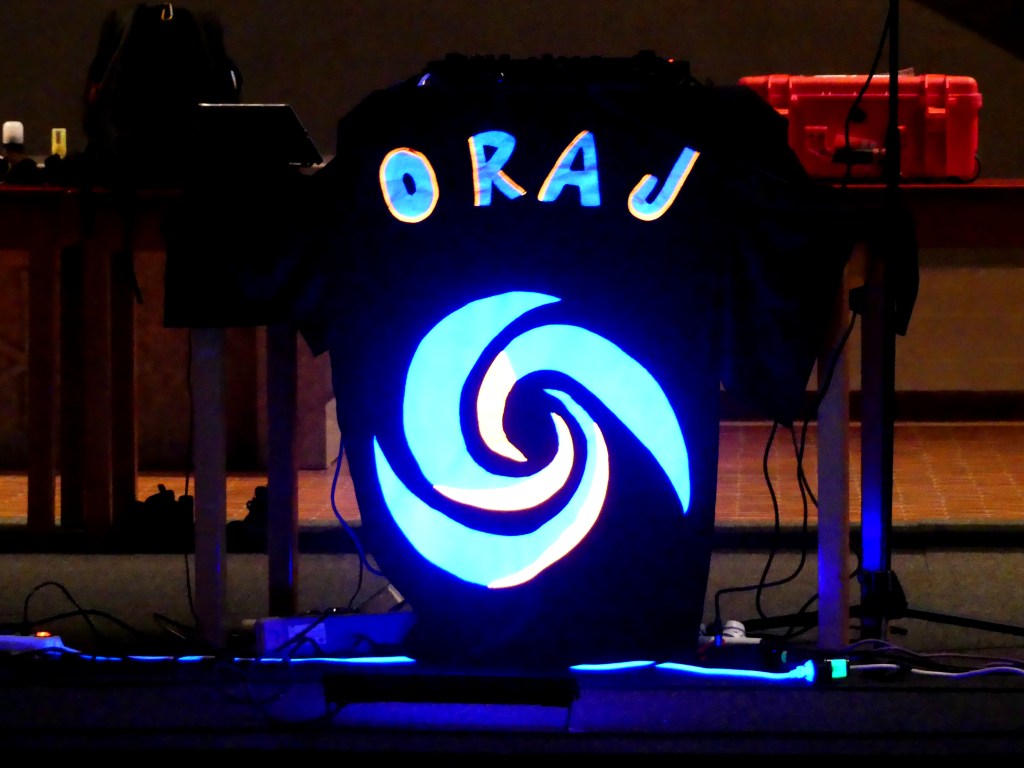
photo credits © cynje
Ding dong ding. Do you hear the church bells ring?
October, 2025. The initial date doesn’t work because of several time conflicts. In trust we cancel and postpone, which turns out to be a great decision.
Ding dong ding. Do you hear the church bells ring?
December 19th, 2025. We are approaching the most conventionalized Christian holiday in Europe. Yet, this event is neither about Santa Claus nor about bonding through more or less useful presents.
What was a vague idea with many uncertainties is happening:
A transdisciplinary consortium (comprising a local urban project to repurpose a vacant church for sociocultural purposes, two dance communities, two master’s students, and a multi-stylistic ensemble of musicians and DJs) organized an event that brings together different worlds within the unusual setting of a vacant church. The program includes several workshop modules, interactive reflection stations, live music with ORAJ, open-dance formats, and purposefully designed spaces for encounter.
In coherence with the central topic of contact points between different worlds, the food is provided by the local project of Monsieur Ismael, who works together with young refugees.
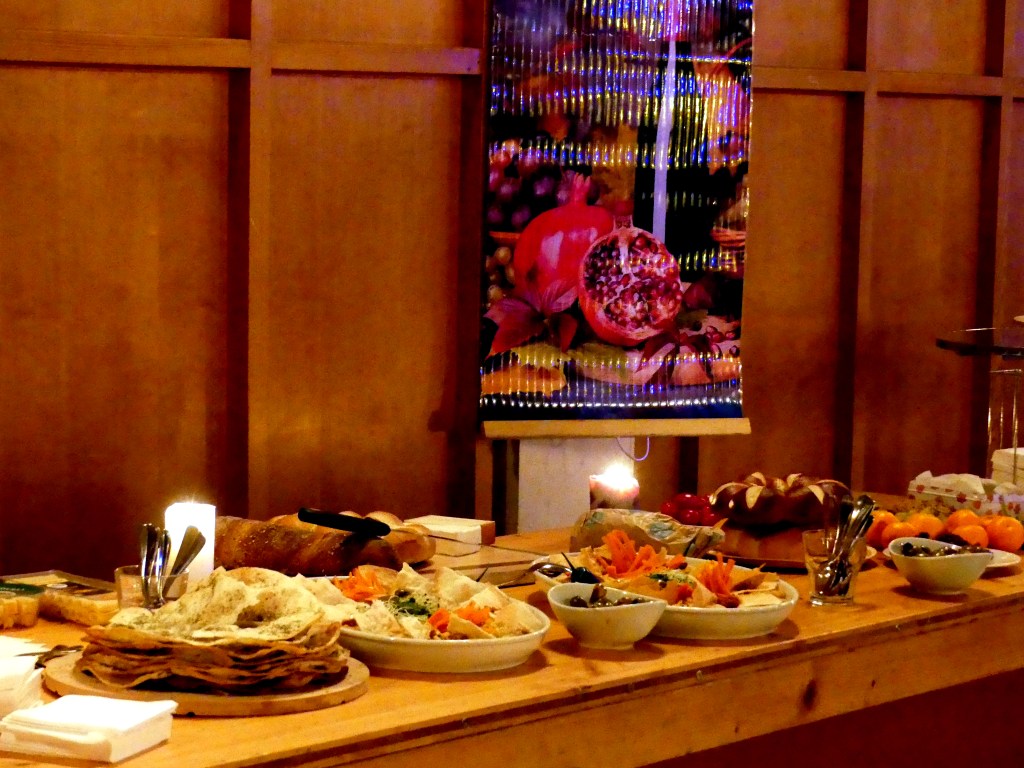
photo credits © cynje
Ding dong ding. Do you hear the church bells ring?
The sound is ready, the band is ready, the food is ready. Time to open the doors.
People start dropping in, less than 1 meter and more than 1.80 m of height, with different skin colours, with different hair colours from blue to grey, with different genders and different work backgrounds. Yet, in terms of cultural backgrounds, we can most definitely still improve – and we take note for our next event.
Before the live band starts, there are two workshops that bring people in touch with each other: the first one focuses on different practices of connection through movement. The second one goes beyond individual connections, creating a sense of collectiveness and community by blending traditional European dances with modern music and values.
After the inputs, there is time to pause, eat, reflect, and prepare for the rest of the evening. We have three stations with different sets of questions that participants can visit at their own rhythm. We also have a station with face paint that glows in the dark, another element to foster getting in touch and building community
Ding dong ding. Do you hear the church bells ring? Eight times they ring.
The lights are dimmed. The installed black lights give white clothing and painted faces a particular glow. The church hall transforms. ORAJ starts their set – and strangers start to move together, getting in touch and syncing in.
But what about safety, you might wonder? Surely, not everybody feels equally comfortable with moving, touching, and dancing. We care about that, too: a clear code of conduct, a care team, and infrastructure that allows for recharging are non-negotiable parts of the event design.
Ding dong ding. Do you hear the church bells ring? Ten times they ring.
Somebody who enters the church at this time with a critical eye would be most definitely confused: what is going on here? And what on earth does this church full of people moving their bodies to different DJ sets have to do with research on socioecological justice?
Very good question! Let me elaborate:
In their article on embodied emotions and space, Davidson & Milligan (2004:524) state that “place must be felt to make sense. This leads to our feeling that meaningful senses of space emerge only via movements between people and places.”
In concert with this statement, the premise of the event is that we can make sense of places through movement, but that we can also transform their meaning through moving through and within them in ways that diverge from the common ones.
However, how we have built cities and urban spaces is not always supportive of body movements that serve us and bring us joy or ease. One of the interactive stations – moderated by reflexions on the limitations different spaces set on body movement – invited participants to prefigure how a “danceable city” might look. For example, like this:
“A city where all the inhabitants can move freely, safely and playfully, human and non-human. Are there wild spaces, are the parks connected, so that animals can move more freely? Does the infrastructure invite playfulness? Like curvy streets, different textures, interesting city furniture that invite playfulness. Are the streets accessible for all people, like wheelchair users? What rhythms does the city create, and how do they inspire creativity? Is there water moving through the city, little waterfalls, fountains… is there space for spontaneous gatherings, like parks, square, maybe stages? Are there surfaces with different textures, like beaches for example, that invite different moment and dance?” (InsTanz participant)
Ding dong ding. Do you hear the church bells ring? Eleven times they ring.
Spaces have their limits – and humans do, too. Consequently, the topic of boundaries, explored in another interactive station, is an important one: as individuals, as communities, as earth population. Through dance and being in touch with others, the relevance of healthy but firm boundaries becomes immediately tangible: trust grows if they are set and respected, which allows for feelings of connection and safety. Transgressing them can leave traces, requiring repair and aftercare. Through collective dancing, this becomes embodied knowledge – not only between two dance partners, but also as a group of dancers. The more people are dancing in a limited space, the more careful and attentive they need to be with their moves, whether as a couple or as a solo dancer. Reflective questions and movement impulses guide participants to explore this topic in an embodied way: how do you express boundaries? When do you need them? When do you want to get rid of them?
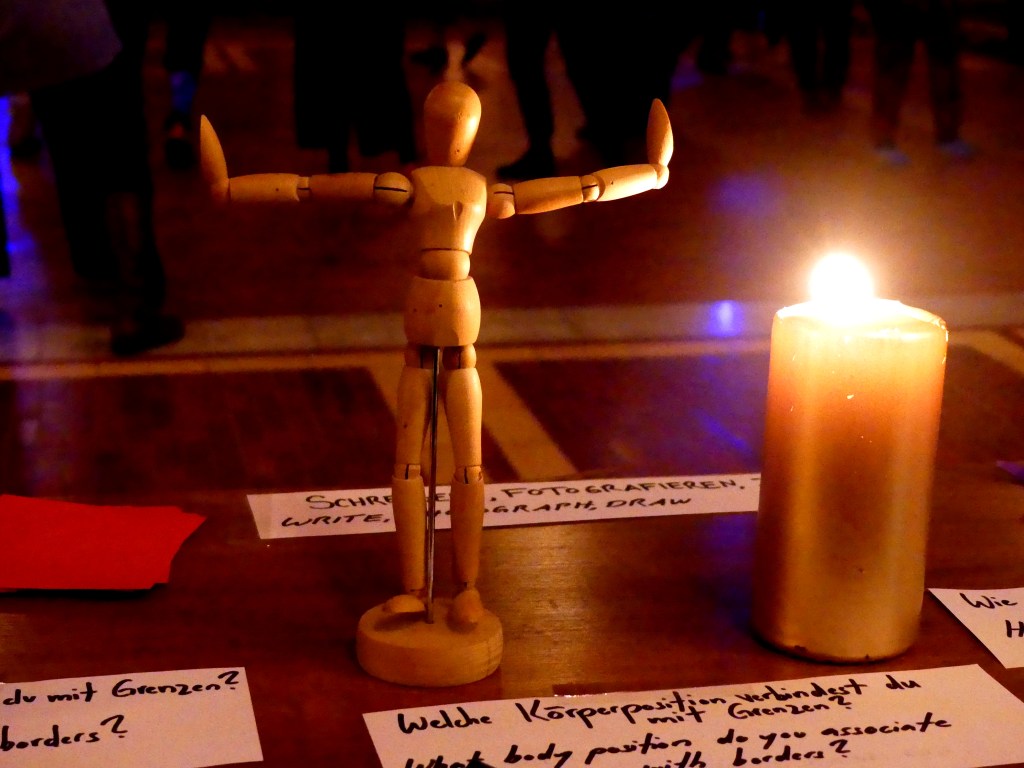
photo credits © cynje
Boundaries, limits and contours as tools for collective freedom?
Ding dong ding. Do you hear the church bells ring? Twelve times they ring.
It’s getting late. Bodies are still dancing, moving, and engaging in non-verbal conversations with one person or in little groups. Tiredness makes the movements slower, softer, and more caring. In only a few hours, strangers became companions and partners and co-creators of this collective experience.
In fairytales, we would start to turn into pumpkins now. But we are still allowed one or two hours of afterglow until even the last two pairs of dancing feet surrender to gravity. Exhausted but happy, we wrap it up – of course not without a little debriefing check-in: how do we feel? And would we do it again?
Hell yes.
 s.e.n.s.o.g.r.a.p.h.i.e.s
Hinterlasse einen Kommentar